














Do miracles happen? This is such an important question, not only because it’s footy finals time and my beloved Adelaide Crows are in 6th place. The question forms the fault line between the atheist/materialist worldview and the Christian worldview.
The former assumes there is nothing supernatural and goes to work from there. Anyone who is captive within that worldview will naturally, then, struggle to take Christian claims seriously. They’ll categorise them under superstition, sentimentality, delusion, myth; in turn under the heading RELIGION; in turn under FICTION.
We Christians, on the other hand, see ourselves as the ones connected to reality, and non-believers as the ones living a fantasy. It’s helpful for sacred agents to affirm to others that we are never asking others to simply believe something that is not true. Some think our faith is like a parched person in the desert believing in a mirage, because ‘at least it gives you feelings of hope.’ We must protest that pointing parched people to mirages is both cruel and dangerous and we’re not up for it! We insist that people keep their scientific, evidence-seeking, truth-committed hats firmly on. (See 1 Co 15:13-19!)
I find a helpful crossing-point from the materialist worldview to ours can be the miracles of Jesus, because there is surprisingly good evidence for them. This makes for an excellent conversation point with those who consider Christianity unscientific.
The best evidence for Jesus’ miracles comes, ironically, from his enemies – and he had plenty of them. Since so many of these events took place in open public, it would be the easiest thing for his opponents to attest that they never happened or were nothing but hype.
But they didn’t.
Instead, what was their take? ‘He did these miracles by the power of the devil.’ This objection is recorded in all four gospels. It was still the line taken by Jewish anti-Christians a hundred years later, according to Justin Martyr. Later again, it’s the line against Jesus in the Babylonian Talmud – that he was a sorcerer.
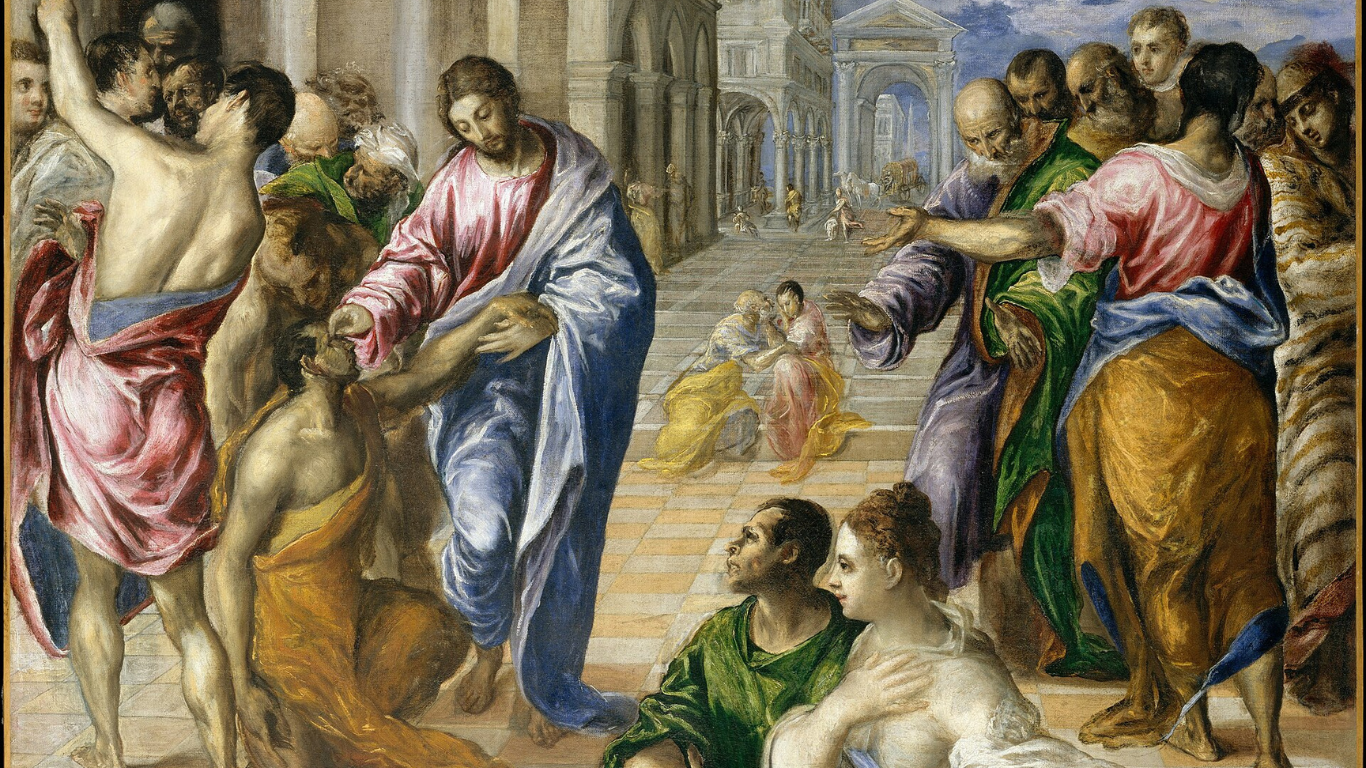
If Jesus’ emphatic enemies wouldn’t even try to deny these miracles, then they’ve done him the great favour of confirming them. There’s no doubt they were astonishing – the gospels themselves record how people’s minds were blown on seeing them. But they can still blow scientific minds today, as the conversation shifts from ‘did they happen’ to ‘how did they happen’ – and the gospel documents then are moved out of the King Arthur-ish myth category and back into the historical-biography category, to be taken seriously as they should. Tell your thinking friends!
*Andrew Turner is Director of Crossover for Australian Baptist Ministries.
There’s no better investment than the gospel. Support Crossover to help Australian Baptists share Jesus.
Image: Christ Healing the Blind, El Greco, c. 1570. Metropolitan Museum of Art, New York. Public domain.