





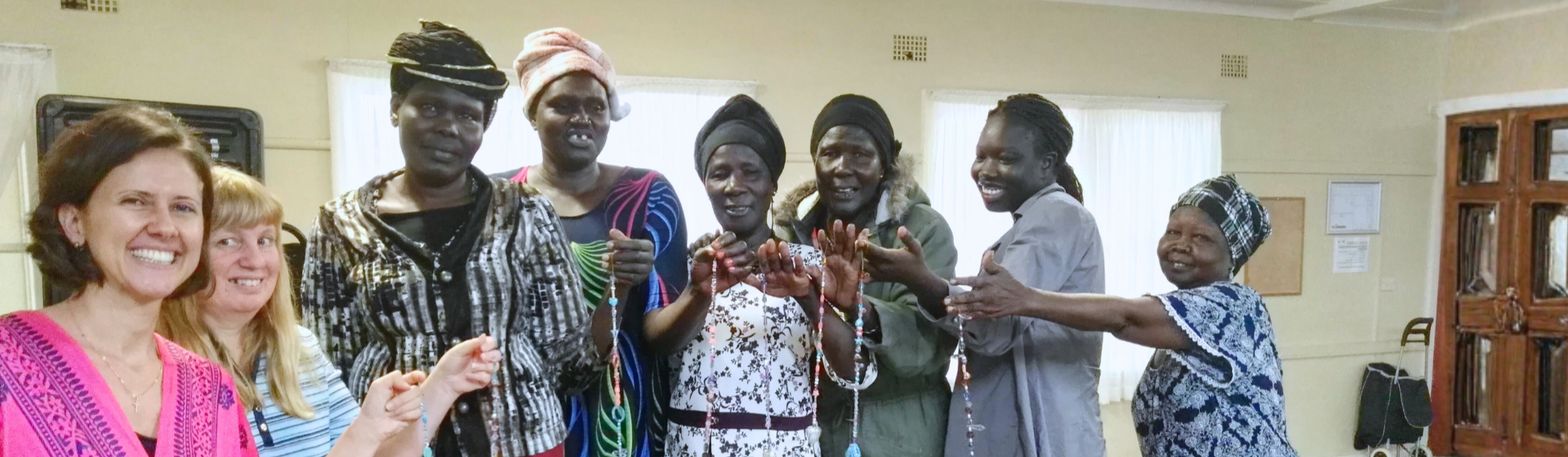
This Refugee Week we’re celebrating some of the ways our churches are partnering to support refugees in their communities.
In 2023, Merrylands Baptist Church launched a Community Engagement Team to look at the community around them and plan and prioritise how they might be a light in their local community. They recommended that the church explore opportunities to partner with five key groups – including refugees.
They began exploring what this could look like, and in 2024 welcomed the opportunity to partner with Freedom to Flourish, a small Christian ministry that offers counselling and group programs to those with refugee or migrant backgrounds. Experienced therapists design programs that use expressive arts, gardening, nature, somatic movement, sports integrated with other psychotherapy approaches to provide mental health and trauma support. Whatever form the group takes, the focus is on the participants connecting with others and receiving support, all whilst having therapists present who are equipped to help in the trauma healing process.
 “Our model is focused on holistic care,” explains Caroline Hochstetter, co-founder and director of Freedom to Flourish, “bringing Jesus’ healing and restoration in four areas – restoration with self, with others, with creation and with the Creator.”
“The church at its best as a safe community already embodies the transformative healing work that refugee communities need and that Jesus brings,” explains Marbuen Diaz, Church Witness & Intercultural Lead at the Baptist Association, “today, more than half of CALD Australian Baptist churches are actually refugee communities. We have a huge opportunity to partner with CALD churches who are already resilient in this space”.
Settling in a new culture and community is challenging, but refugees also carry complex trauma from the prolonged, repeated and inescapable stressors they’ve experienced, such as torture, war and human rights abuses. This can make it exceptionally hard for refugees to engage in a therapy context, or even in friendships. Freedom to Flourish’s model is long-term, providing a safe, ongoing environment for participants to engage in the healing process. This is the kind of support and safety that’s not easily provided in a limited clinical setting.
“Christians coming alongside people from a refugee background tell us that refugees continue to really struggle with the trauma they’ve experienced,” explains Caroline, “trauma can be a huge barrier to trusting and opening up in new relationships. We want to support churches in their cross-cultural work by providing this safe space for people to heal.”
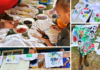
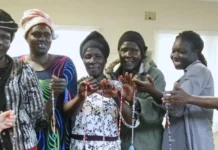
Along with making Freedom to Flourish one of their mission partners, Merrylands Baptist also provided a designated room for Freedom to Flourish to set up a welcoming Creative Therapy space to base many of their activities, including weekly Explore and Express through the Arts group. Participants engage in visual art, dance, trauma-sensitive breathwork, storytelling and imaginative play in a way that enhances trauma reparation.
“We have professionals to guide the group and ensure we don’t cause harm, but I’m not going to tell someone how to heal,” explains Caroline, “I want to be a learner and work alongside different groups and explore what’s helpful for them. Our model is holistic and participatory.”
This group is offered in Farsi and English, thanks to an Iranian volunteer translator, and has become a part of Merrylands Baptist’s community engagement and how they care for refugees in their local community. The church also offers food ‘welcome packs’ for visitors to the church who’ve recently arrived in Australia, collects items at Christmas for Sydney Refugee Team and provide space for Community Migrant Resource Centre and NSW Health to provide support to migrants in the Merrylands area.
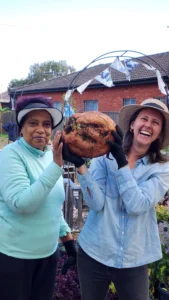 Freedom to Flourish runs other groups across Sydney, including a men’s social soccer group and a horticulture/gardening group. There is no set formula for what a group should look like. “The relationship is the most important part,” explains Caroline, “people form relationships with each other and are supported in the groups.”
In each group, trained counsellors or psychotherapists work alongside a team of volunteers from Freedom to Flourish’s partner organisations, WEC, Pioneers and SIM, as well as volunteers from partner churches. “We want to leave people feeling loved by the church,” explains Caroline, “people can see that we, as The Church, have something to offer. Whatever background they’re from, they see the love and see Christ in the midst of what we’re doing.”
Freedom to Flourish is fully supported by the prayer, volunteer hours and donations of supporters. To find out how you can be involved, and sign up for their prayer newsletters, visit https://www.freedomtoflourish.org.au/partner