






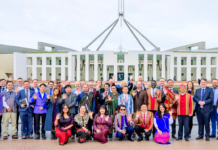
Around this International Women’s Day we’ve been celebrating some of the incredible women who’ve contributed to our shared Baptist mission. Meet some of them below!
Jen Trevena
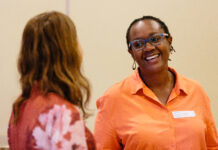
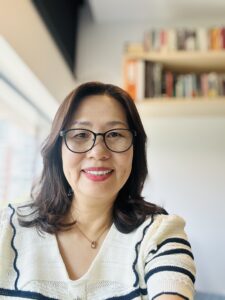 Jen Trevena, Mission Catalyst at Baptist Churches of NSW & ACT, wears a lot of hats. She’s an Accredited Pastor, a single parent, and a first-generation immigrant with English as a second language. She was also the first Korean woman accredited as a pastor in the Baptist Churches of NSW & ACT and the first Christian in her Buddhist family.
“When my daughter was one, God clearly called me to the pastoral ministry. In 2014, my church appointed me as a student pastoral worker, but the training was limited as they held the complementarian view of woman’s leadership. I was convinced that I was mission-focused and pastoral-focused, and this conviction led me to believe that there was a call on my life to be a church planter. I couldn’t find a position that met my gift and call in the church that I was in, so I moved to Morling College and to a Baptist church.
“I saw many women lecturers and pastors who were encouraging my leadership and vision of call. My leadership as a woman was strengthened. Yet, as an Asian woman, and as an English-as-a-second-language pastor in an English congregation, it was not an easy process for a local church to accept me as a pastor. Especially as I brought a new vision for inter-cultural church. However, through patience, tears, prayers, communication and the support of mentors and friends, I finally got a pastoral role in the church and could gain accreditation. I was a woman, church planting with an Asian and non-Baptist background, facing barriers that could make the journey to accreditation tricky. But I was encouraged and affirmed. I have been patient and faithful to the vision that God gave me and am grateful and honoured to be part of the Baptist Women who have been accredited.”
Jen wrote a chapter for the recently published book Edge-Walkers: Reimagining Faith, Church and Theology, a compilation from twenty authors about what it means for them to be on the fringes of faith, church and theology. Her chapter, titled “Kinosis”, captures some of the incredible stories from her church plant. You can also find out more about Jen’s church plant in this OurStory article.
Florence Young
 In 1882, Florence Young was 25 years old and still a relatively new Christian. Set to sail from Sydney to visit her brothers in the Solomon Islands, a couple of friends offered to pray for her. They all knelt together, and after her friends had prayed, she went to stand up. ‘Why don’t you pray, too?’ they asked. Florence desperately tried to put words together, but nothing would come out, and after a couple of agonisingly awkward minutes, one friend finished for her.
Florence journeyed north feeling acutely embarrassed, but also unable to shake off one her friend’s prayers – asking God to make her a blessing to everyone she saw on the plantation.
Florence saw the plantations as her mission field and taught the Bible to plantation workers. When the Federal Government eventually outlawed the overseas labour schemes, over 2,000 workers had been baptised and taught the Bible essentials! Churches and mission stations multiplied – 179 by her last visit – despite the very serious dangers of disease, shipwreck and cannibalism.
Read more about Florence Young, founding leader of the Baptist movement in the Solomon Islands, at Crossover.
Effie Baldwin
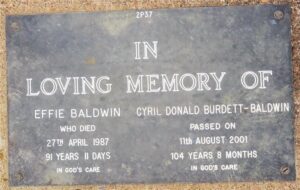 Effie Hinemoa Steed (1896-1987) was the first female student at Morling College. Enrolling in 1918, Effie Steed completed a one-year course of study as she prepared for mission service. Her decision to study is remarkable: she was the sole new student that year and the Baptist Theological College of NSW (as it was named then) had only started in 1916.
The Principal, Rev Alexander Gordon, reported to the Assembly, “A feature of this session was the presence of Miss Steed as a student, preparatory to her going to India. The Council cordially admitted her at the request of the Foreign Mission Committee. She has done exceptionally well, and we believe will render good service on the Field”. It would be some years before another woman became an official student at the college.
Effie’s deep commitment to mission led her to India where she served with the Australian Baptist Missionary Society from 1918 to 1946. In 1930, she married fellow missionary Cyril Baldwin.
Morling College’s female student accommodation on the Sydney campus was named the “Effie Block” until 2016, in recognition of her. These days, the Effie Baldwin Higher Degree by Research Scholarship aims to uphold Effie Baldwin’s pioneering spirit, call to Christian ministry, and academic excellence by inspiring and empowering outstanding female students to pursue advanced research degrees at Morling College.
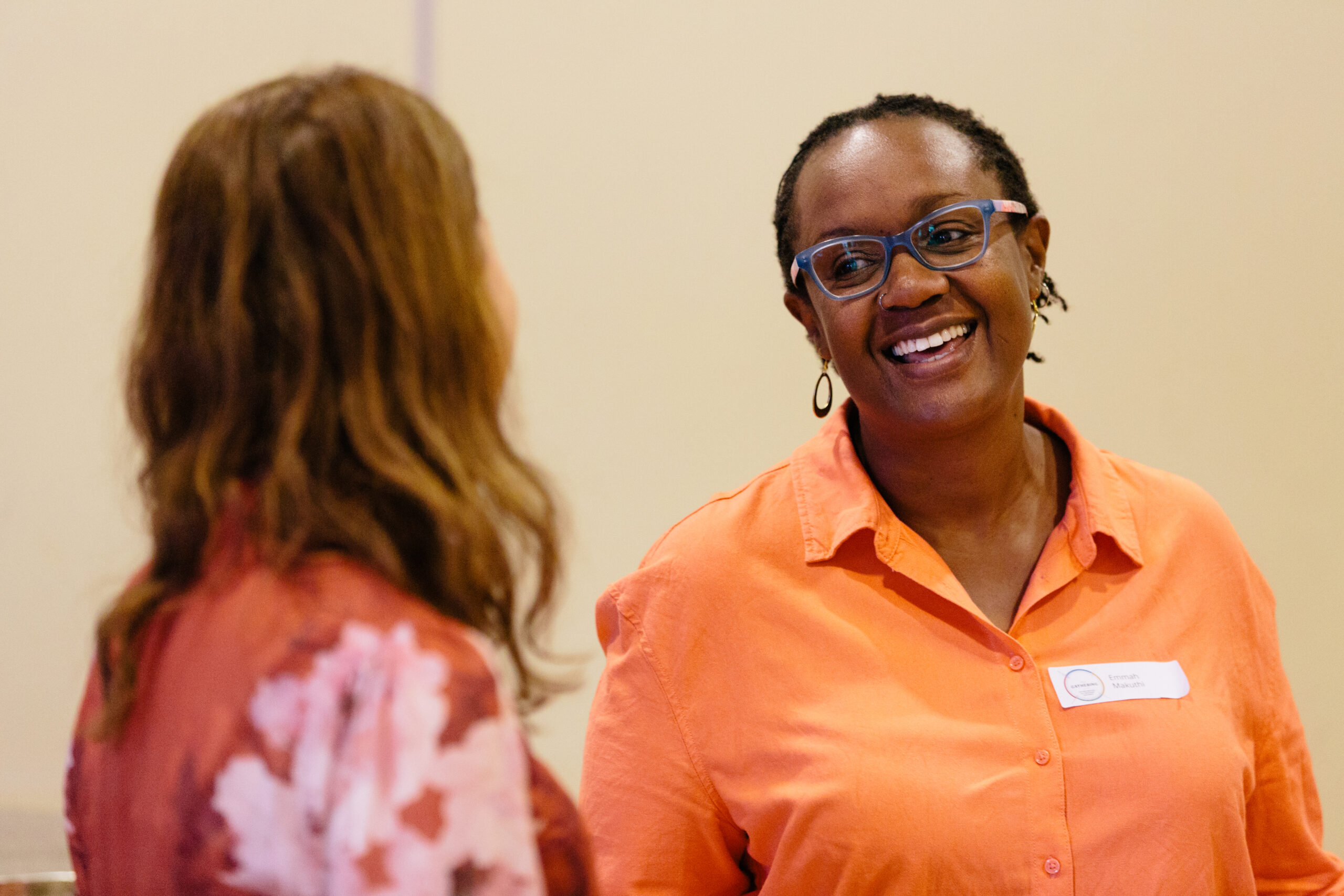
Emmah Makuthi
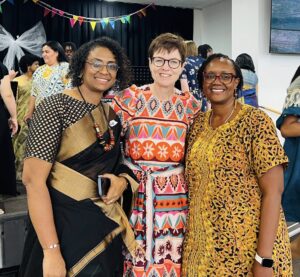 Eight years ago, Emmah Makuthi came to Sydney as a missionary from Kenya and soon joined the team at Greater West for Christ. After about one year, she felt the call to focus her work on women. Initially she resisted, having spent much of her career already working in gender issues and human rights, including for the United Nations.
“I started realising the gap in women in leadership in the Greater West,” reflects Emmah, “everywhere I went I found women with so much potential, but they were shying away from opportunities.”
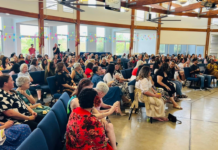
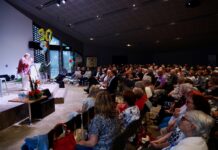
In 2019, they launched the annual Great West Women Conference, with the pillars of Grounded, Godly and Gifted. At the first conference there was 50 women, which has grown to 260 women in 2025.
Emmah sees the conference as a space for women to meet other women, for fellowship, community and networking. “My greatest joy in Greater West Women has been the relationships,” reflects Emmah, “I meet so many women doing great things.”
Greater West Women attracts women from all walks of life, and with a diverse range of experiences and gifts. “I want the Conference to be a place women can come and serve. Bring your gift. Last year we women from had 60 different churches attend, and 30 nationalities.”
Emmah encourages everyone to listen to the incredible stories of women in their lives. “I don’t just create an event for women to come to me,” Emmah clarifies, “I go to their things. I go to women’s events, mums’ groups, everything. It’s not my show, it’s their show. We’re a priesthood of all believers. There are incredible women everywhere I go.”
Read the full story here.
Rachel Stuhr
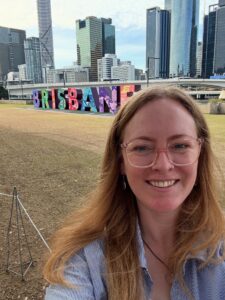 Who are you, what do you do and why do you choose to do it?
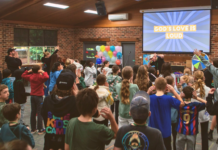
My name is Rachel and I run the IMPACT Young Adults programs. I love doing ministry with young people and creating opportunities for them to explore who God made them to be.
What challenges did you face as a woman stepping into church leadership?
I had never seen women in positions of significant leadership in Christian contexts growing up, and in the early stages of my leadership I found I was often the only woman in the room when gathering with other pastors and leaders. I had to quickly learn to speak up with confidence even when I had none.
How do you see women reflected in Scripture?
The Bible is full of incredible stories about women having deep and lasting Kingdom impacts. From the woman at the well who evangelised her entire village, to the daughters of Zelophehad who worked to advocate for women to be able to inherit land, Scripture clearly shows the value God places on women. Women are shown to be an important part of Gods plan for the world and are often used to bring about justice in surprising ways.
What unique perspectives do women bring to church leadership?
Women tend to see things through a very different lens. Our life experiences and our engagement with the world is different from men’s and that’s a good thing! The perspective of women can be incredibly helpful to churches as they shape policy and practice.
How can the church better support and uplift women in ministry?
Listen. Listen to what women are saying, what we’re asking for, and do your best to make it happen. There are a lot of barriers for women in ministry, and many of them don’t have to be there. You’ll know what’s needed if you listen and respond.
What advice would you give to young women who feel called to serve?
Ministry can be difficult in many ways, but so rewarding. Find an experienced mentor and hold tight to their support and encouragement as you step out on this journey of faith.
Check out their website: yourimpact.org.au
Lily Higlett
 Lily Low was born on 7 March 1880. Her parents were prominent Baptist and part of the Albion Church in Queensland. As a teenager, Lily came to faith herself and was baptised at her family church. She became deeply involved in the life of the church. In 1909 she married Rev William Higlett and quickly settled into the role of minister’s wife. Soon the couple left Albion Church, where Lily was honoured for her “devoting herself so lovingly to the work here for so many years” and presented with a gold brooch on behalf of the women of the church, and another on behalf of the Junior Christian Endeavour.
William accepted an appointment as General Secretary of the Baptist Union of NSW. Lily began serving on the Deaconess’ Association, the Women’s Home Missions Association and the Ministers’ Wives Union. Lily was asked to speak at women’s and girls’ associations around the state. She became was well known and respected as a leader of denominational women’s work.
Lily’s passion for overseas ministry also led her to became President of the Zenana Missionary Society in 1931, a support group for Baptist evangelistic and social work among the women of India. As President, she was given a seat on the NSW Baptist Foreign Mission Committee, and she was soon attending federal board meetings.
On 7 June 1943, just four days after her first grandson, John, was born, Lily suffered a seizure and passed away. In a glowing tribute at the funeral service Rev John Deane, who was Baptist Union President at the time, said:
The official tribute of the Baptist Union Executive said that “her loss was irreparable, her worth of character was beyond praise and her complete surrender of life and will to Christ, her devotion and true humility and her natural gifts of leadership was what made her permanently fruitful in the service of God.”
You can read the full article here.
Amy Shum
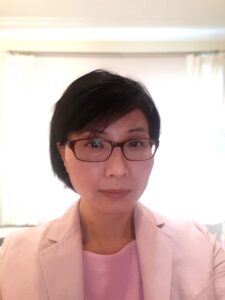 Who are you, what do you do and why do you choose to do it?
I am Amy Shum, a 1.5 Chinese immigrant from Hong Kong. I am a pastor at Chinese and Australian Baptist Church West Ryde. I also do some adjunct teaching at Morling college, which began after the completion of my PhD.
What challenges did you face as a woman stepping into your role?
The main challenge was finding a church that fully support women in ministry. In the past, I needed to work with limiting preaching opportunities. My current church accepts women in leadership roles.
How do you see women reflected in Scripture?
The Bible has shown me that the work of God transcends cultural limitations. For example, God chose Deborah to lead Israel into battle. God chose Ruth (the Moabite) to be the great grandmother of King David. God chose Mary Magdalene to the first to witness Jesus’ resurrection and share the Good News.
What advice would you give to young women?
Discern you call and gifts from God. If God has called you, He will provide and open doors for you. Seize opportunities to exercise your gifts. As you serve, people will recognise and affirm your gifts. These affirmations will serve as encouragements. My call has sustained me through many challenges in the past.